
The new standard of care.
Clinical studies have long shown that buffered injections are less painful, faster acting, and for infected teeth, twice as likely to work1.
According to a recent article in Dr. Bicuspid, a leading dental industry publication:
Both new products "... offer convenient, simple-step buffering, and it’s fair to say both are major improvements to the clunky and expensive devices of the past."
"With all significant barriers to buffered anesthetics removed, a new standard of care has arrived.1"
What Key Opinion Leaders Say
"It is my strong belief that buffering of dental local anesthetics should be a routine part of all dental injections."
- Dr. Stanley Malamed
What is buffering?
Dental anesthetics contain acid to preserve their shelf life. The acid can be up to 25,000 times more acidic than human tissue.
"Buffering" refers to pH-balancing of the anesthetic prior to injection.
Decades of research have shown that removing the acid from local anesthetics produces faster onset, less injection pain, and increased reliability2, 3.
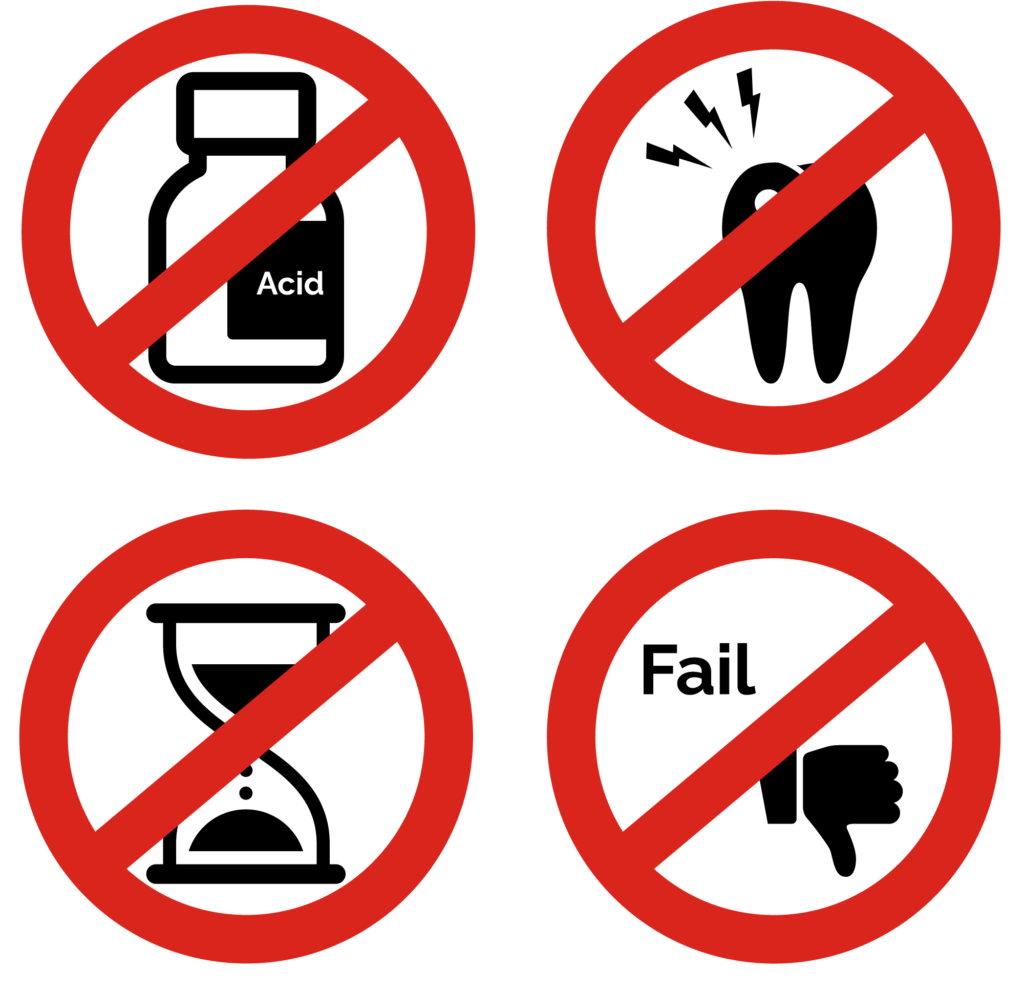
In 2026, Every injection should be buffered
Dental injections are acidic, too painful, slow-acting, and unreliable.
They don't have to be. Remove the acid.
With new innovations within the past year, buffering is now a convenient, simple-step process for dentists 1.
FOR DENTAL PROVIDERS
We are building our database of rapidly growing number of dentists who have transitioned to buffering. If you are currently buffering your anesthetic, let us know.